Saturday, March 30, 2013

Texas State Politics 101


How do state and city politics interact? This is a major issue when it comes to jurisdictional questions about oil and gas drilling as several proposed bills at the state level could enhance, diminish, or otherwise alter city authority. To answer this question, some basic information about the Texas State Legislature might be helpful. So here is a brief run down on some salient points.

1.      Article one of the Bill of Rights of the Texas Constitution proclaims that the right of local self-government is essential to freedom. That is something to ponder with all these bills that attempt to rob cities of their right of local self-government.

2.      The Texas Legislature Online has tons of information about the current 83rd legislative session. You can learn everything from how a bill becomes a law to the various committees. One nice feature of this website is that you can sign up for alerts. I, for example, have signed up to get e-mail alerts anytime something happens to HB 2828 (an enemy of local self-government now with the Energy Resources Committee) in the legislative process.

3.      What influence does the oil and gas industry have on Texas State politics? Check out the National Institute on Money in State Politics. One way to track this question is through campaign contributions. The oil and gas industry gave roughly $7 million to all candidates and committees in 2012 (almost all of that to Republicans). That is about 33% of all the money given by the oil and gas industry in campaigns across all 50 states, which was about $21 million. But it is only about 5% of all campaign contributions in Texas, which was roughly $138 million. Another way to track industry influence is by lobbyist expenditures – but I can’t find good figures for the oil and gas lobby in Texas. Let me know if you have them.

4.      The state legislature is different in many ways from city government. Perhaps most importantly, there is no 72 hour notice for hearings about bills. Notice can be given late at night for a hearing early the next morning. You might travel to Austin to testify in support or opposition to a bill only to be stuck waiting for hours or even days as the legislators pop in and out of committee and pick and choose randomly from the bills on the agenda (just because yours is listed second does not mean it will be discussed second). There is also much more that can happen substantively behind closed doors at the state level.

5.      The legislature only meets for 140 days every odd-numbered year. Lots of bills are considered each legislative session (something like 7,000 last session) but few become law (around 200 last session). (Check out the wiki page for more basics.)

6.      Most bills that would impact cities would be bad for cities. And Denton has lots of legislative exposure, because it does so many things – water treatment, solid waste and recycling pick-up and handling, and its own electric utility (DME).

7.      As a result, Denton has a small intergovernmental relations team and hires lobbyists to advance its interests in Austin during legislative season.

8.      In addition, almost all cities in Texas are part of the Texas Municipal League (TML). This organization discusses how various bills impact the interests of cities, obtains intelligence about the legislative process, and formulates strategies for advancing city interests. Denton was one of the founding 13 cities to form TML.

9.      There are various strategies for opposing bills. Official resolutions by a City Council are one tool that can be used. But cities typically use this tool sparingly, because it likely will make an enemy of the legislator who is sponsoring the bill and the city may need the assistance of that legislator on other issues. Yet sometimes a bill would be so damaging to a city’s interests that it will spend its political capital in this way.

10.  Just because a bill dies in committee does not mean it can’t be resurrected. Legislators in the House and the Senate can bring their bill forward as an amendment or a rider to another bill being considered on the floor later in the legislative session. Or their bill could be added during conference committee deliberations. This can be a risky time, because by the end of the session so much is happening so quickly that legislators do not have the time to read the full text of every bill.

11.  Finally, here is the information for Denton County’s delegation. Now you have no excuse not to get involved:

Representative Myra Crownover, District 64

512-463-0582


Representative Tan Parker, District 63

(512) 463-0688


Representative Pat Fallon, District 106

(512) 463-0694


Representative Ron Simmons, District 65

512-463-0478


Senator Jane Nelson, District 12

512-463-0112


Senator Craig Estes, District 30

512-463-0130

Friday, March 29, 2013

What Happened to Air and Water Monitoring?

First of all – has anyone else noticed that if you go onto municode and find the gas well ordinance (subchapter 22 of the development code)…it is unchanged! It looks like it is an old version, because it still has a 1,000 foot setback listed instead of 1,200 feet. Someone should fix that…
OK – onto my point: Just before City Council voted to adopt our new gas well drilling and production ordinance, they made three key moves. First, they increased setback distances to 1,200 feet. Second, they regulated some aspects of compressor stations. Third, they promised an air and water monitoring program. On the third point, they noted that this would not be part of the ordinance for reasons I think I understand. But that meant the monitoring program was left unspecified. It was one of three aspects of the ordinance (zoning and pipelines being the others) that I gave an “I” for incomplete when I graded the ordinance a couple months ago.
Well, it is still incomplete. I have recently come to learn that basically nothing has been done to fulfill this promise. We cannot let this one slip through the cracks and fade away...but as of now (two months after the promise was made) all the following key questions remain unanswered:
1.      How comprehensive will the program be? (e.g., how many sites?)
2.      What kinds of technologies and methodologies will be used? (e.g., will it be periodic or continuous; will it use summa canisters or FLIR cameras…will they be gas find FLIRs; will it use gas chromatography to speciate precisely the chemicals detected?)
3.      What pollutants will be monitored for?
4.      What will we do with the information/data acquired? (e.g., post on website, share with TCEQ?)
5.      How will it be funded and what will the budget be?
6.      Who will we contract with and what responsibilities will they have?
The city’s Executive Team is meeting now and apparently this program is on their agenda. So, hopefully we will start getting some answers soon. But we need to politely but persistently inquire about the progress of this program.
I believe monitoring is important because of the way we do innovation. We enroll new technologies (like fracking) into society without fully comprehending their various environmental and health consequences. In this way, we are constantly running real-world experiments. Any good experiment needs to be closely monitored so that we can gather information about problems and make adjustments accordingly. Thus, for me, what is most troubling about fracking are things like secret chemicals and court-ordered non-disclosure agreements that prevent us from learning and adjusting (what I call ‘renovating’). We also suffer from a lack of information about impacts to air and water. Case in point: TCEQ has just 21 ambient air monitoring stations in the nearly 10,000 mile2 DFW area.
If we are going to adopt this proactionary approach to innovation, then we must monitor the experiment, hold bad actors accountable, and continuously improve. One of the injustices built into our capitalist mode of innovation is that monitoring equipment is often exceedingly expensive – thus sparingly used. I plan on learning more about this in the coming weeks, so look for updates.  

Wednesday, March 27, 2013

HB 1496 Takes a Beating

Here are the minutes from a recent hearing of the House Committee on Land & Resource Management about HB 1496. You can see that no one, including the Chair of this Committee, Joe Deshotel, seems to take too kindly to poor Van's bill.


HB 1496   By Taylor, Van. Relating to governmental actions affecting private property rights in certain oil and gas wells. - Pending. 

The Chair recognizes Rep. Taylor to explain the Bill. Rep. Taylor explained that the Bill would affect the permitting of oil and gas wells. He discussed the specific criteria that exist and how the Bill would impact those existing provisions. He continued that if the city does not allow drilling when a permit has been granted that it would give a cause of action for taking. He shared that the foundation for the Bill is grounded in the long standing protection of private property in the United States. 

(6:52) The Chair asked for a scenario where private property would be under the municipal jurisdiction which prohibits drilling but able to get a permit from the Railroad Commission. Rep. Taylor shared that the Railroad Commission does not take into consideration municipal codes when granting permits. So a permit can be granted that is in contravention of a city’s ordinance. The Chair asked how that does not constitute a taking. Rep. Simpson asked if there have been instances where the Railroad Commission has granted a permit but the mineral rights owner was not able to drill based upon municipal ordinance. Rep. Taylor shared there have and that there would be witnesses testifying to those. Rep. Taylor shared that the Bill doesn’t require the allowance of drilling but just an accommodation that allows for some method of drilling to get to the private property. The Chair asked about the valuation process under the Bill. Rep. Taylor stated his Bill does not address valuation. The Chair asked if the permit must be issued before drilling is denied under the Bill. Rep. Taylor indicated it would. Rep. Springer asked how ETJ affects drilling. Rep. Taylor stated he would let the city’s witnesses testify to that. Rep. Springer asked if the Bill would cover activity that originates in the County but affects the property rights in the municipality. Rep. Taylor shared the Bill would give a cause of action to anyone who can’t access their property because of a municipal ordinance. 

Jimmy Bennett, At-Large-District 7 in Arlington, Texas testifying against the Bill. Mr. Bennett expressed his belief that the Bill would remove local control as it exists to regulate oil and gas drilling. Mr. Bennett clarified that Arlington is not against oil and gas drilling but the removal of local control. He explained that Arlington has already passed permitting rules that respect the property rights of mineral right owners and the community. 

The Chair stated that the Bill would only create a cause of action when a municipality blocked drilling. Mr. Bennett shared that was one way of looking at it but that the alternative was that by allowing the Railroad Commission to permit irrespective of local laws would be to remove the right to enact local laws under threat of legal action. Rep. Goldman asked if the witness was speaking on behalf of the City of Arlington. He shared he was. Rep. Springer asked about the drilling done on City property. Mr. Bennett said he would have to defer to other witnesses. Rep. Springer asked if there were instances where Arlington has denied the right to drill. Mr. Bennett shared that some options for drilling had been denied but that accommodations were provided to allow access to the minerals through other technology out of a desire to provide for public safety. 

Rep. Paddie asked about the effect of removing the need for the oil and gas industry to be encouraged to negotiate by the possibility of being precluded from drilling by city ordinance. Mr. Bennett shared that was a significant concern. 

Don Crowson, Fire Chief and Director, Emergency Management, City of Arlington testifying against the Bill. Mr. Crowson shared he believes the Bill threatens public safety and removes local control that provides for that safety. Rep. Springer asked how many well emergencies there were in Arlington in the last year. Mr. Crowson shared a release, their definition of an emergency, has occurred at least 20 times. Rep. Springer asked if there were injuries or fatalities. Mr. Crowson shared there were not in Arlington but there have been in North Texas. 

James Parajon, Community Development and Planning Director, City of Arlington testifying against the Bill. Mr. Parajon shared that the Bill would remove tools the municipality uses to insure safety and to protect property rights. By leaving permitting to the Railroad Commission alone there is no way for the city to address safety concerns. The city would also be limited in its ability to plan and protect its future through zoning. He pointed out that there are existing remedies that make this Bill unnecessary. The Chair asked what remedies exist. Mr. Parajon pointed to the existing process for permitting and creating ordinances and then the ability to sue for a taking if property was seized. Rep. Springer asked if there was a state law that allowed the city to take mineral rights. Mr. Parajon shared that he was not aware of one. Rep. Springer asked why the city should be able to deny access to mineral rights based on a 50 year plan. Mr. Barrett shared that a better example was that the Bill made allowances for distance requirements for permitting through the railroad commission as the City of Arlington does but their standards are different based on what they believe is needed to protect the safety of its citizens. Rep. Paddie asked if they had experienced difficulty reaching accommodations with property owners wishing to drill in the past. Mr. Bennett stated that they had not. 

Clayton Chandler, City Manager of Mansfield testifying against the Bill.  Mr. Chandler pointed to a unanimous resolution in opposition to the bill and a map showing the number of wells approved by the City of Mansfield (over 500) and current wells (approx. 200). Mr. Chandler pointed out that currently mineral rights owners, the oil and gas industry and municipalities are able to co-exist and beneficially negotiate agreements allowing drilling. 

Bill Lane, Public Safety Director, Senior Staff Attorney, City of Mansfield testifying against the Bill. Mr. Lane reiterated the opinion that the Bill would remove local control and create a cause of action where a remedy already exists for a legitimate taking under the constitution. Mr. Lane shared his opinion that safety was not addressed by the Bill, but noise. The Chair commented that he could not locate the safety section. Rep. Taylor pointed to the section in the existing statute he is seeking to amend covering the issue of safety. 

Steve Lindsey, Director of Government Affairs for Quicksilver Resources and City Council Rep. for City of Mansfield testifying against the Bill.  Mr. Lindsey clarified that the setback Rep. Taylor discussed was to protect against affecting other mineral rights and does not resemble a surface set back. Mr. Lindsey shared that the Bill is an ill fitting tool to address an infrequent issue of state versus local primacy. Mr. Lindsey pointed out the system as it is works and that the law shouldn’t be changed to accommodate the difficulties presented by one city, Flower Mound. 

Rep. Simpson asked if this wouldn’t just create a reverse condemnation. Mr. Lindsey agreed that it would. He shared that in 99% of instances agreements are reached. In the other 1% a takings action could be filed. 

Rita Beving for Public Citizen testifying against the Bill. Ms. Beving shared that cities were given authority to pass ordinances to provide for safety through statute long before the issue of permitting of this type arose. These regulations are necessary to protect all citizens and must be balanced against the property rights of mineral right holders. Ms. Beving referred to several resolutions passed by multiple cities against the Bill. Rep. Simpson shared he thinks the Bill requires compensation when drilling is not permitted but that if certain issues are addressed that drilling can precede. Ms. Beving spoke to the designated set backs and pointed out that HUD wouldn’t issue a loan on a home within a setback provide by the Railroad Commission. The Chair clarified that the Bill would mean no matter what accommodations were offered if drilling is not permitted there is an action for a taking. 

(8:30) Buddy Green for himself testifying against the Bill. Mr. Green is a retired oil and gas professional. Mr. Green shared that his fear is that the proximity of these operations will threaten the value of his and his property as well as its safety and their health. Mr. Green feels the Bill will lower the threshold for a government taking and will therefore encourage litigation. He also feels the Bill is legally and practically unnecessary. Mr. Green believes the Railroad Commission cannot adequately regulate the permitting process in the place of municipalities. Mr. Green believes a right of action to enforce a taking already exists. 

Bruce Hanson, Corinth City Councilman testifying against the Bill. Mr. Hanson stressed the importance of local control in the history of Texas law. He believes applying the Texas Private Property Act to cities, which they are currently exempted from, is a serious erosion of local control. He pointed out that this could lead to other interests seeking to acquire the same right this Bill would give to oil and gas companies.  Mr. Hanson shared that his city council went to great effort to protect property owners when mineral rights owners were seeking variances. 

Scott Houston, General Counsel Texas Municipal League testifying against the Bill. Mr. Houston characterized this as a 'pay or waive' law. The city could only prevent oil and gas interests from gaining variances by paying the amount the minerals are valued at. Rep. Springer asked how a property owner would seek redress if a municipality doesn’t allow exploitation of mineral rights to uphold their ordinances and won’t allow drilling. Mr. Houston explained the Constitutional claim for takings and the elements involved. Rep. Springer asked about municipalities that ban all drilling options. Mr. Hanson shared that such a situation would likely be open to a takings claim. Mr. Springer asked how this is handled under the ETJ. Mr. Hanson said most do not use the ETJ to protect against these types of permitting. 

Jean Levenick, Flower Mound testifying against the Bill. Ms. Levenick shared that the wider implication of the Bill is that it would undermine all regulations passed by municipalities to best protect their citizens.  Rep. Parker commended the distinction between local and state control pointed out by the witness. Rep. Herrero asked if the witness is a council member in Flower Mound. She responded that she is. 

Christa Lopez Reynolds, Attorney with the City of Ft. Worth testifying against the Bill. Ms. Reynolds commented on the erosive impact the Bill would have on the autonomy of cities and municipalities. She reiterated the impact on setbacks within municipalities. Ms. Reynolds explained that Ft. Worth has a process for appealing the set back provisions that reflect local sensibilities. Ms. Reynolds also commented on the difficulty in doing oil and gas valuations because of the rapid fluctuations in prices. 

Brian [sic] Meredith, Attorney with cities of South Lake, Mansfield, Euless, and other cities in North Texas testifying against the Bill. Mr. Meredith shared that the Bill would elevate the rights of a mineral owner above what the law allows to that of a surface property owner. He believes that the proper remedy is the existing right of reverse condemnation. He pointed to the difference in legal threshold under the Bill for mineral rights and the threshold for surface property. This would seek to make mineral rights owners a special class of property holders. 

Rick Trice, Assistant Director Planning and Development, City of Ft. Worth testifying against the Bill. Mr. Trice stated that the agreed with those who testified previously and reiterated the issues of eminent domain and loss of local control. He also pointed out the Bill addresses surface use criteria and not the criteria that should be applied to mineral rights. 

Robin Schneider, Texas Campaign for the Environment testifying against the Bill. Mr. Schneider commented on the variety of interests that oppose the Bill as evidence of its failings. 

Roy Morris on behalf of himself testifying in favor of the Bill. Mr. Morris commented that he hasn’t heard a mineral rights owner testify. Mr. Morris outlined his problems getting a permit from the City of Flower Mound. Rep. Simpson asked about the shape of the 160 acres Mr. Morris owns in Flower Mound on which he was not given a permit. Mr. Morris shared it was nearly square. Rep. Simpson asked if he could sue for inverse [reverse] condemnation. Mr. Morris shared that several legal actions had been brought with no result. Rep. Simpson asked about the exhaustion of due process. Mr. Morris shared they were not seeking appeal of the district court’s decision. Rep. Springer asked what the valuation of the mineral rights were. Mr. Morris shared it could be in excess of 100 million dollars. Rep. Goldman asked if all of his property were in the City of Flower Mound. He stated that it is. Rep. Simpson asked if he was aware of other instances of this happening in the state. Mr. Morris shared he couldn’t state for certain but that he believed it has occurred in South Lake and other North Texas cities. Rep. Goldman asked if there were any spot on his property where he could drill. He stated he could not. Rep. Springer asked if the surface was being developed. Mr. Morris shared that there is a hospital and an apartment complex but that much of the development died because of lack of funding from the drilling. 


Monday, March 25, 2013

Why we should oppose HB 2828


If you don't think pipelines are a big issue around here, then take a look at this image from a TX Railroad Commisison query done by Ginger Simonson. It shows pipelines in Denton County. Note that the query limits results to just the first 300...so there are likely more pipelines not shown.  

This is clearly a land-use issue of epic proportions. Yet HB 2828 will strip cities of their power to regulate pipelines. In so doing, it hands power to the state thereby misidentifying this as purely a minerals development issue.
Here are some reasons to oppose HB 2828.

- Giving the TX RRC full authority to regulate the placement of gas wells and pipelines, will basically negate a city’s ability to its manage growth and development.
- Pipelines require easements and access that remove “buildable” space from a community.
- It will also put private property at increased risk of being condemned by eminent domain if the TX RRC is given the authority to decide what a common carrier is.
- Pipelines and compressor stations are widely regarded as some of the most dangerous elements of the gas industry. Muncipalities are responsible for protecting the health, safety, and welfare of their citizens and thus should be allowed some significant say in the governance of pipelines and compressor stations.

Tuesday, March 19, 2013

A Resolution Opposed to HB 2828

My thanks to Ginger Simonson for pointing this out to me. I am going to see if I can get City Council to pass this resolution that I just wrote. Follow this link to HB 2828. I also paste it below the resolution:


A Resolution of the City of Denton, Texas Opposing House Bill 2828, Recently Introduced in the Texas Legislature, Relating to Rules and Standards for the Gas Pipeline Industry

Whereas HB 2828 would preempt and supersede any ordinance, order, or rule adopted by a municipality relating to any aspect or phase of the gas pipeline industry; and

Whereas pipelines and related infrastructure, including compressor stations, are widely acknowledged as some of the most dangerous, noisy, and intrusive aspects of the production of oil and gas; and

Whereas the effect of HB 2828, if enacted, will be that cities will have no influence over the location and specifications of pipelines in their jurisdiction unless given permission by the Railroad Commission; and

Whereas, under current law, courts have recognized the legal authority of municipalities to regulate certain aspects of pipelines, including in some instances their location; and

Whereas, as written, HB 2828 appears to infer that pipelines could be permitted anywhere within the city regardless of their noise, health, or aesthetic impacts and regardless of their proximity to homes, parks, and other protected uses; and

Whereas the production and distribution of natural gas are not just mineral development issues but also and more importantly local land use issues with implications for the health, safety, and welfare of surrounding neighborhoods and communities; and

Whereas municipalities have long held constitutionally recognized rights to govern land use issues in their jurisdiction; and

Whereas it is apparent that HB 2828 will negatively impact municipalities and their residents; NOW, THEREFORE,

THE COUNCIL OF THE CITY OF DENTON HEREBY RESOLVES:

Section 1. The City Council hereby adopts and incorporates the above referenced findings in this Resolution. 

Section 2. The need for municipal regulatory authority is paramount when drilling, producing, and transporting oil and natural gas since these operations have distinct implications upon the surface estate and the owners of neighboring surface estates.

Section 3. The City Council hereby opposes the adoption of HB 2828 and the City Manager, or his designee, is hereby authorized to forward this resolution to appropriate Senate and House members of the 83rd Session of the Texas Legislature and to engage all efforts to defeat this bill.

Section 4. This Resolution shall take effect immediately from and after its date of passage.


H.B.ANo.A2828

A BILL TO BE ENTITLED AN ACT relating to the effect of rules and standards adopted by the Railroad Commission of Texas relating to the gas pipeline industry on ordinances, orders or rules adopted by political subdivisions.

BE IT ENACTED BY THE LEGISLATURE OF THE STATE OF TEXAS:

SECTIONA1.AASubchapter D, Chapter 121, Utilities Code is amended by adding Section 121.1515 to read as follows:

SectionA121.1515AAEFFECT ON OTHER LAW. The rules and standards promulgated and adopted by the commission under Section 121.151 preempt and supersede any ordinance, order, or rule adopted by a political subdivision of this state relating to any aspect or phase of the gas pipeline industry. A political subdivision may petition the commission for permission to promulgate more restrictive rules and standards related to conditions for mapping, inventorying, locating or relocating pipelines over, under, along or across a public street, alley or other public property in the boundaries of the municipality.

SECTIONA2.AAThis Act takes effect on September 1, 2013.

The Importance of Place in the Fracking Debate

Who should make the rules? This is the key question surrounding fracking. The most important battle over who shall rule pits towns and cities against corporations and federal and state governments. This week, the town of Dryden, NY faces Norse Energy Corp. in a landmark New York Appellate Court case about whether municipalities have the right to ban fracking.

Mary Ann Sumner was elected Town Supervisor of Dryden (the political equivalent of Mayor) in 2007. At that time this community of 15,000 people in southern New York knew very little about the technological revolution of fracking. But landmen were hunting for leases, so they formed a task force and they didn’t like what they learned. Fracking promised to industrialize a town with a strong rural character. “Our biggest industries are family farms and a gravel mine,” Sumner explained. After months of heated debate, Dryden banned gas drilling on August 2, 2011. Six months later, this town with an operating budget of $5 million was sued by Anschutz Exploration Corp., a multi-billion dollar energy company. In a show of solidarity, Sumner was re-elected by an overwhelming majority while the case was in court.
Dryden won the first battle in a ruling made a year ago by the New York Supreme Court. But they are now facing an appeal by Norse, which has taken over from Anschutz. “We are in this fight,” Sumner said, “because we need to retain the rural character of our town. It comes down to this: Who should make the decision affecting our land? The people who live here and who can identify a bend in a road and tell you which bog that is? Or someone in corporate offices far away who knows nothing about our lives?” 

That question is being contested across the country. Last year, the Pennsylvania legislature passed Act 13, which stripped municipalities of the right to prohibit gas development. But five months later, Act 13 was partially nullified and we are now awaiting a final ruling on its constitutionality by the Pennsylvania Supreme Court. Act 13 originated from ALEC, a free-market think tank funded by the billionaire oil baron Koch brothers. The Texas state legislature is currently considering HB 1496, which would similarly neuter municipalities. The author of this bill, Van Taylor (from fracking-free Plano), had his campaign financed in large measure by Denbury Resources, an oil and gas company.

Last year, when President Obama and Governor Romney were fighting over who would cut the most red tape on oil and gas development, the candidates for Mayor of Denton were fighting over who would apply the most red tape. More and more people who are accustomed to just consuming oil and gas are finding themselves exposed to the nasty production side of the business. As a result, they are working through local governments to adopt a “not in my backyard” stance at odds with corporate and national goals. In New York, dozens of towns and cities have banned fracking. Tea Partiers and tree huggers unite in opposition to fracking at the local level, finding common ground in a vague ideal of “small government” that signifies everything from federalism to bioregionalism.
Fracking is two things at once. It is energy policy where the relevant comparisons are to coal, wind, and solar power. And it is a local land use issue where the comparisons are to pawn shops, adult video stores, and frat houses. It represents both our global interdependence on networks of commodities and our place-bound lives in communities.

So, to ask who should rule is to ask how we should weigh the goals of mineral development and community character. The fault line here runs along the private/public divide in our lives. As consumers in the private sphere, we need the energy network. But as democratic citizens we need enfranchisement in the public decisions that impact our lives.
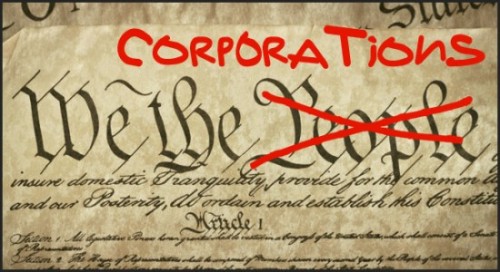
In the late nineteenth century, private corporations were upgraded to ‘persons’ with constitutionally protected rights, while municipal corporations (towns and cities) were downgraded to “creatures of the state.” According to Dillon’s Rule, cities “owe their origin to, and derive their powers and rights wholly from, the legislature. It breathes into them the breath of life, without which they cannot exist. As it creates, so may it destroy.” Yet at the same time several state constitutions granted cities the power of “home-rule,” meaning some measure of autonomy and the ability to enact legislation without explicit state permission. And in 1926, the Euclid Supreme Court case validated zoning as a permissible exercise of municipal authority to restrict certain uses of private property.
Zoning gives cities the power to limit the location of industrial activities. Everyone agrees fracking is an industrial use. But unlike many other industries it cannot locate just anywhere, because it depends wholly on minerals that are stuck underground. From the perspective of energy networks, who cares if there is a park or a school on top of the hydrocarbons? But from the perspective of local places, this makes fracking like Frankenstein’s monster. It is an unholy creature out of sync with the order of things. It is out of place. But that only matters to the extent that place matters.
 
Place should matter a great deal. If a well is planned near your home or your child’s school, you ought to be involved, and municipal government is the only political institution that will be responsive. Take it from those in unincorporated areas living near wells governed only by the bare bones rules of state agencies concerned primarily with getting the minerals out of the ground. If you don’t live in a city with police and zoning powers, you are treated not as a person in a place but as a node on a network.

Cities should hold the lion’s share of power over fracking, because it is as a land use issue that the most profound interests are at stake: what kind of activities can occur in my neighborhood and how will they impact my children, my lungs, and my water? The New York Supreme Court took a step in this direction when they upheld Dryden’s ban last year. Justice Phillip Rumsey leaned on the distinction of ‘how’ vs. ‘where.’ State government decides questions of how fracking must be done, but local governments decide questions of where it can take place.

This upholds the vital good of local self-determination. Because what is at stake with fracking is not just environmental and economic questions, but also civic questions about whether we can escape the stupor of private consumption and find purpose in crafting the public good. As Alexis de Tocqueville argued: 

Municipal institutions constitute the strength of free nations. Town meetings are to liberty what primary schools are to science; they bring it within the people’s reach, they teach men how to use and how to enjoy it. A nation may establish a free government, but without municipal institutions it cannot have the spirit of liberty.
This is why we should root for Dryden and resist the Texas legislative threats to local power. In the age of unlimited corporate spending at higher levels of government, the city is the last bastion of genuine democracy in America.


Friday, March 15, 2013

Tell City Council to Oppose HB 1496

I just got word that City Council will consider a resolution opposing HB 1496 at their next meeting on Tuesday. The meeting starts at 3 p.m. and it is item #5 on the agenda. Please show up to express your support for a resolution. UPDATE: The item will be officially acted on during the Regular Session on Tues, which starts at 6:30....it is item 5D, so it may not come up for a while into this meeting.

Here are their e-mail addresses:

 mark.burroughs@cityofdenton.com]‎‎; Dalton.Gregory@cityofdenton.com
Jim.Engelbrecht@cityofdenton.com]‎ chris.watts@cityofdenton.com
 pete.kamp@cityofdenton.com‎;
James.King@cityofdenton.com‎;
kevin.roden@cityofdenton.com

Friday, March 8, 2013

Fight HB 1496

There is some confusion about whether to support HB 2277. But there is no doubt about HB 1496. We need to defeat it, because it strips us of our basic right of local self-determination.
Those who must bear the costs of drilling and fracking should be empowered to shape decisions about when, where, and how those industrial activities occur. Municipal government is the only feasible political entity capable of granting and ensuring this power. Local government is most knowledgeable about community needs and most directly accountable to the people whose interests are at stake.

It is clear that state and federal governments conceive of fracking abstractly in terms of energy and economic growth. But fracking is more fundamentally – for those who live with it – a land use issue. It is about the air our children breathe, the water we drink, and the character of our communities.

Home rule municipalities have long been granted the authority to adjudicate conflicts with regard to land use issues. Zoning powers, in particular, are important tools for ensuring that the interests of a powerful few do not undermine the common good. There are also plenty of existing checks on any potential abuses of local authority, including regulatory takings laws and the general doctrine of pre-emption. Corporations are treated as persons with constitutional rights, whereas cities are treated largely as mere “creatures of the state.”
Cities are relatively powerless political entities to begin with. To further erode their power is to deal a fatal blow to a long-standing ideal that local governments are vital to democracy. As Alexis de Tocqueville argued: 
Municipal institutions constitute the strength of free nations. Town meetings are to liberty what primary schools are to science; they bring it within the people’s reach, they teach men how to use and how to enjoy it. A nation may establish a free government, but without municipal institutions it cannot have the spirit of liberty.

Indeed, it is this sense of public liberty that is put in jeopardy with this bill. I mean by that a basic right to participate in and exercise some meaningful control over the decisions that impact our lives. In a democracy that has sold its soul to capitalism and is, thus, awash with corporate money, municipal government is the last bastion of genuine public liberty.
Decisions about fracking should be made through accountable democratic institutions that provide a fair forum of deliberation for those who are most directly impacted by it and stand to gain or lose the most from it. Yet HB 1496 would hand all power to the state, including the Rail Road Commission, which has as its top priority the task of getting minerals out of the ground. The balance of governance at the state level is overwhelmingly tipped in favor of those who will profit from mineral extraction. That’s why corporations want the state to set the rules for fracking. Only government at the municipal scale provides a level playing field for all interested parties. That is, only municipal government can reign-in the avarice of corporations that get the loot but don’t have to pay for the externalities.
So, HB 1496 represents a big government takeover of small government control. Why would Texans ever favor that? Of course, they would not, unless of course they are being bankrolled by the oil and gas industry. And as it turns out the bill’s author, Van Taylor (who comes from Plano where there is no fracking activity) had his campaign financed in large measure by Denbury Resources, an oil and gas company.
This bill represents corporate corruption of genuine local democracy. It must not live.
Earthworks has this informative post set up about this proposed piece of state legislation. You can also look at this short history HB 1496. It is now being deliberated by the Land and Resource Management Committee. Here is the committee phone number: (512)463-1623. Here are the committee member e-mails, along with those of Van Taylor (the bill’s author) and Myra Crownover (Denton’s state representative).

Please write or call to express your opposition to this bill.

Crownover's fracking bill is misunderstood?

If you look at HB 2277 authored by Myra Crownover, you might think she was trying to gut environmental regulations. It looks like the bill would let natural gas operators put flowback water into unlined pits – even if it has the same chemicals as the original frack water that went down the hole.
Well, I just got off the phone with a representative from her office who argued the intent is actually quite the opposite. The bill is actually designed to promote environmental goals by incentivizing more water recycling by operators. My contact told me that pit liner requirements can be disincentives when it comes to water recycling. Removing that requirement would enable operators to use existing pits to store flowback water that could then be re-used for another well on the same (or nearby) pad site. This would eliminate some truck traffic and reduce water consumption.
My contact admitted the current wording is vague and less than ideal. They are now trying to wordsmith it so that this environmental intent shines through more clearly. This will entail making it very clear that the flowback water allowed in unlined pits must meet the same standards as the groundwater that is currently allowed in those pits. In other words, operators would have to remove fracking chemicals prior to dumping flowback into unlined pits.
My thanks to Sharon Wilson and Cathy McMullen for putting this on our radar – we need to keep watching this to make sure they do indeed fix the wording. We all know the devil is in the details when it comes to drilling legislation.